Canonical
on 5 February 2026
SpacemiT (Hangzhou) Technology Co., Ltd. today announced a collaboration with Canonical to make Ubuntu available on SpacemiT’s new K3 SoC and the existing K1 series RISC-V computing platforms. This collaboration marks a deep integration between open-source operating systems and open RISC-V silicon, bringing powerful, flexible, and reliable intelligent computing solutions to developers worldwide.
Hardware platforms designed for high-performance intelligent computing
SpacemiT’s new K3 series and the existing K1 series chips are built on proprietary RISC-V processor cores and integrate homogeneous AI computing capabilities. Designed for high-performance AI edge inference and AI robotics, the platforms are well suited for applications including robotics, intelligent security at the edge, industrial vision, and AI edge inference.
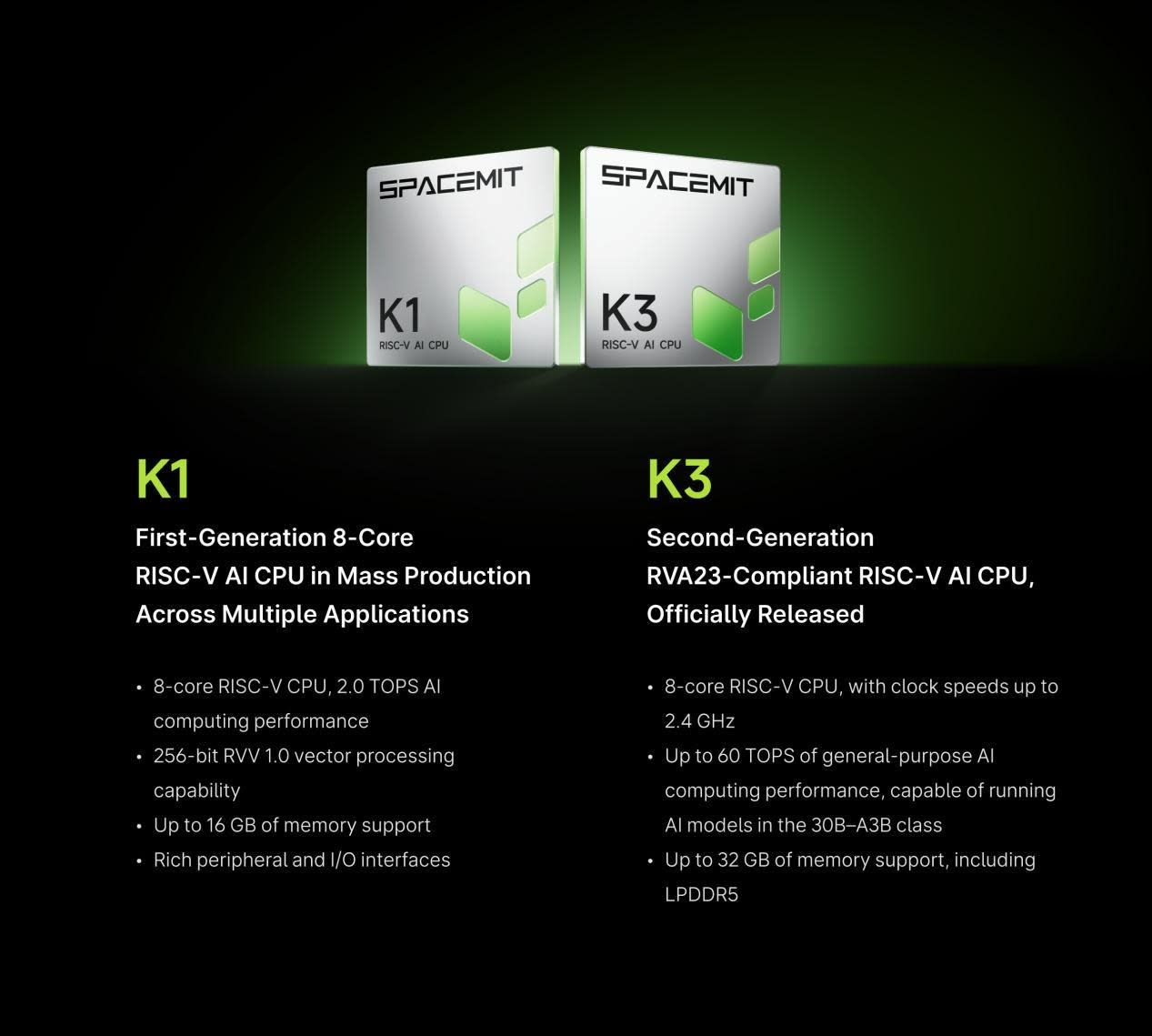
Advancing intelligent computing: seamless OS integration
With the rapid advancement of artificial intelligence, edge computing, and robotics, the market increasingly requires hardware and software platforms that deliver both strong computing performance and high development efficiency. Built on advanced RISC-V architecture and innovative system design, SpacemiT’s K3 and K1 series chips provide an ideal platform for RISC-V high-performance computing. Ubuntu, one of the world’s most widely used Linux distributions, is known for its stability, rich software ecosystem, and strong community support. The availability of Ubuntu on the K3 and K1 series means developers benefit from seamless hardware-software integration as well as:
- Familiar environment: low barrier to entry for existing Ubuntu users
- Ecosystem compatibility: seamless access to Ubuntu’s vast software repositories and application ecosystem
- Community-driven innovation: access to global Ubuntu community resources, documentation and shared expertise
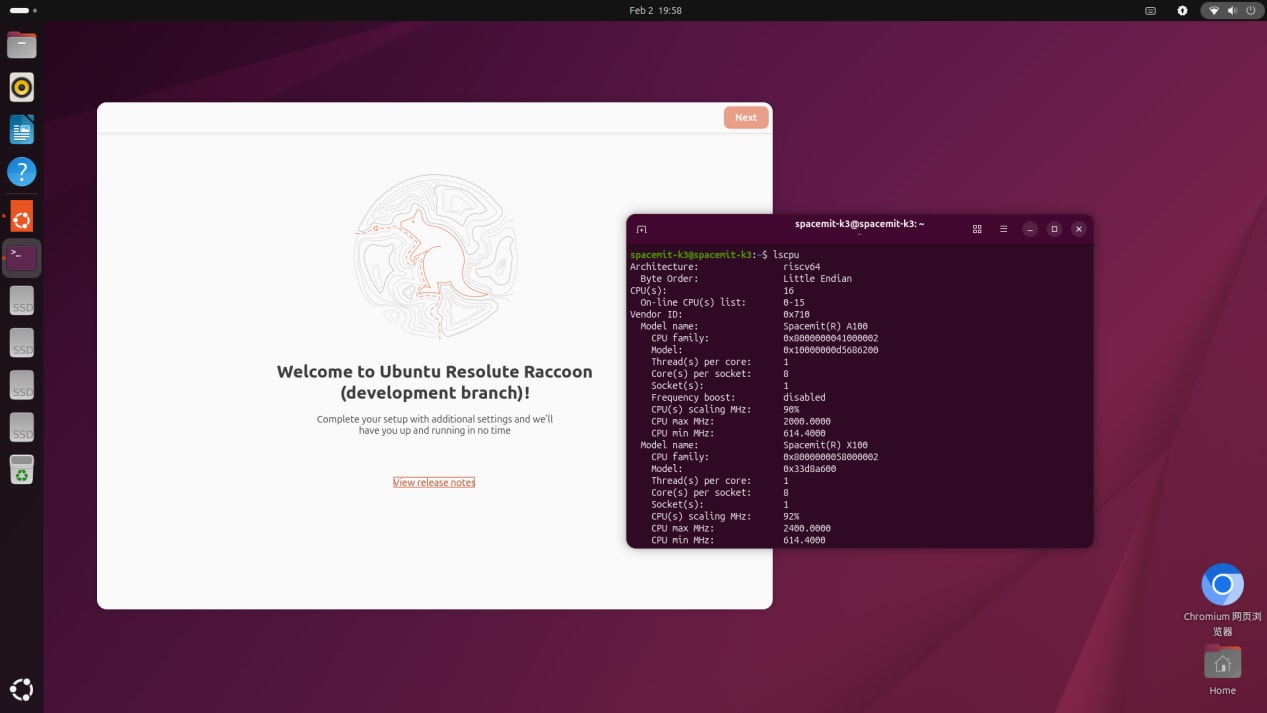
Introducing one of the first RVA23 compliant platforms with Ubuntu
The RISC-V RVA23 profile, introduced in 2024, defines a mandatory set of hardware features for 64-bit processors to help facilitate a consistent software-to-hardware interface. Some of the mandatory features include vector computing for AI workloads, advanced security extensions and hypervisor support. SpacemiT’s K3 SoC is one of the first RVA23 compliant platforms available today. Canonical announced adoption of RVA23 as a baseline profile for RISC-V builds with the release of Ubuntu 25.10. This enables users of RVA23 compliant platforms with Ubuntu to leverage the full power of the chip out-of-the-box and gain a stable, high performing experience.
Collaborating on platform enablement
With RVA23 compliance in mind, SpacemiT has taken the lead in enabling the Ubuntu 26.04 LTS Preview release on the K3 SoC, delivering a new RISC-V desktop experience. The enablement of Ubuntu 26.04 LTS, which will officially be released in April 2026, on the K3 chip will support RVA23-compliant computing systems and products worldwide, representing a milestone in the development of the RISC-V software ecosystem. This is expected to attract more developers and partners, accelerating ecosystem maturity with greater speed and efficiency.
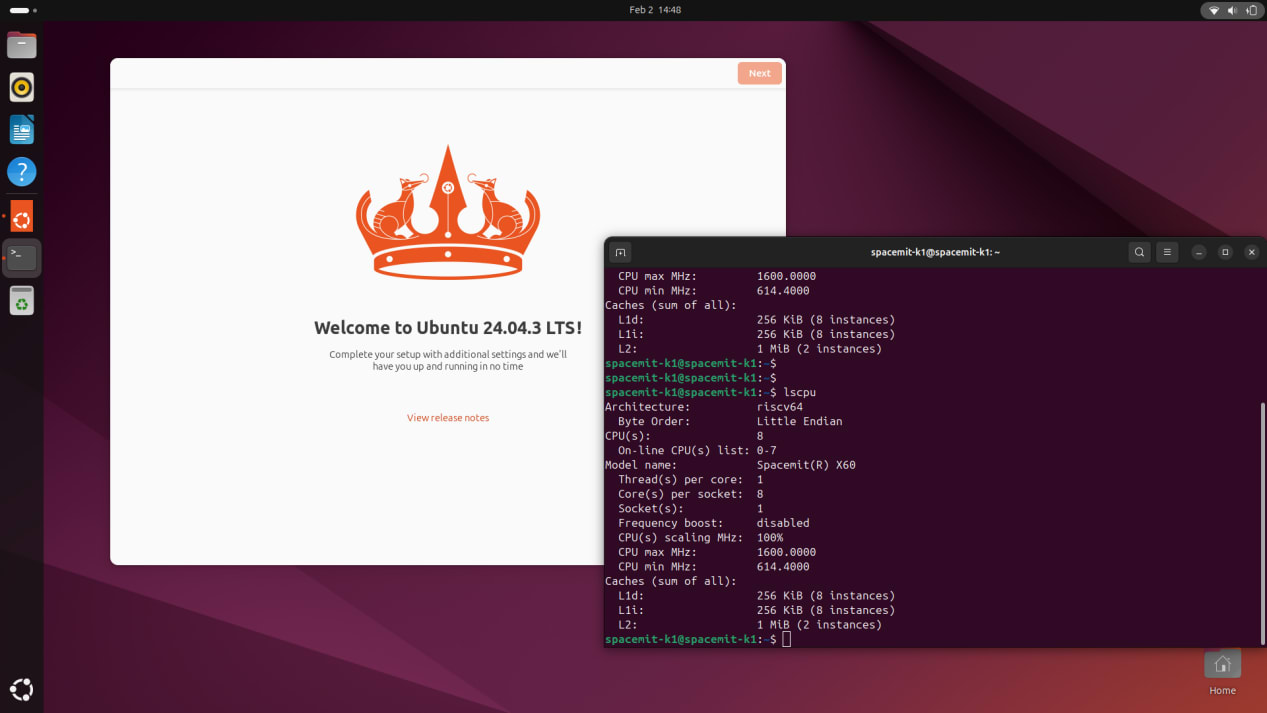
Ubuntu 24.04 LTS availability on SpacemiT’s existing K1 platform
In addition to enabling Ubuntu on the new K3 chip, SpacemiT and Canonical have also collaborated to enable Ubuntu 24.04 LTS across the broader SpacemiT lineup, including the K1 MUSE Book and MUSE Pi Pro. This initiative reflects the companies’ shared mission to bring a world-class Linux experience to the entire SpacemiT community.
A win-win collaboration to accelerate the RISC-V ecosystem
“Ubuntu is one of the most popular Linux distributions globally, and we are delighted to work with Canonical to bring Ubuntu to our K3/K1 intelligent computing platforms and jointly advance the open RISC-V architecture and Linux software ecosystem,” said Sun Yanbang, President of SpacemiT. “This collaboration not only provides developers with a more complete technical solution, but also reflects SpacemiT’s long-term commitment to open standards and open-source ecosystems. By combining Ubuntu’s mature software ecosystem with our advanced RISC-V hardware technologies, we aim to drive innovation and growth in intelligent computing,” he added.
”SpacemiT has significantly contributed to the fast-growing RISC-V ecosystem and leading adoption of RVA23 with Ubuntu 26.04,” said Cindy Goldberg, VP of Cloud and Silicon Partnerships at Canonical. “We’re delighted to work with SpacemiT to make the intelligent computing capabilities of the K3 and K1 series easily accessible to developers. Canonical is committed to amplifying the impact of open source software and making it available to users everywhere. The collaboration with SpacemiT aligns perfectly with our vision and our commitment to the RISC-Vecosystem.”
About Canonical
Canonical, the publisher of Ubuntu, provides open source security, support and services. Our portfolio covers critical systems, from the smallest devices to the largest clouds, from the kernel to containers, from databases to AI. With customers that include top tech brands, emerging startups, governments and home users, Canonical delivers trusted open source for everyone. Learn more at https://canonical.com/
About SpacemiT
Founded in November 2021, SpacemiT is a computing ecosystem company built on next-generation RISC-V architecture. The company focuses on full-stack computing technologies including high-performance RISC-V CPU cores, RISC-V AI cores, NoC interconnects, RISC-V AI CPU chips, and software systems. SpacemiT delivers end-to-end computing system solutions and is committed to building the optimal native computing platform for the next AI era, enabling new applications such as AI computers and AI robots. https://www.spacemit.com